GEMSTONEWELL
Best Crystals for Anxiety and Stress
Crystals people use for calm in crystal traditions, like amethyst and lepidolite, and how to add one to a calming routine. Not a treatment.
 By Gemstone Well
Published
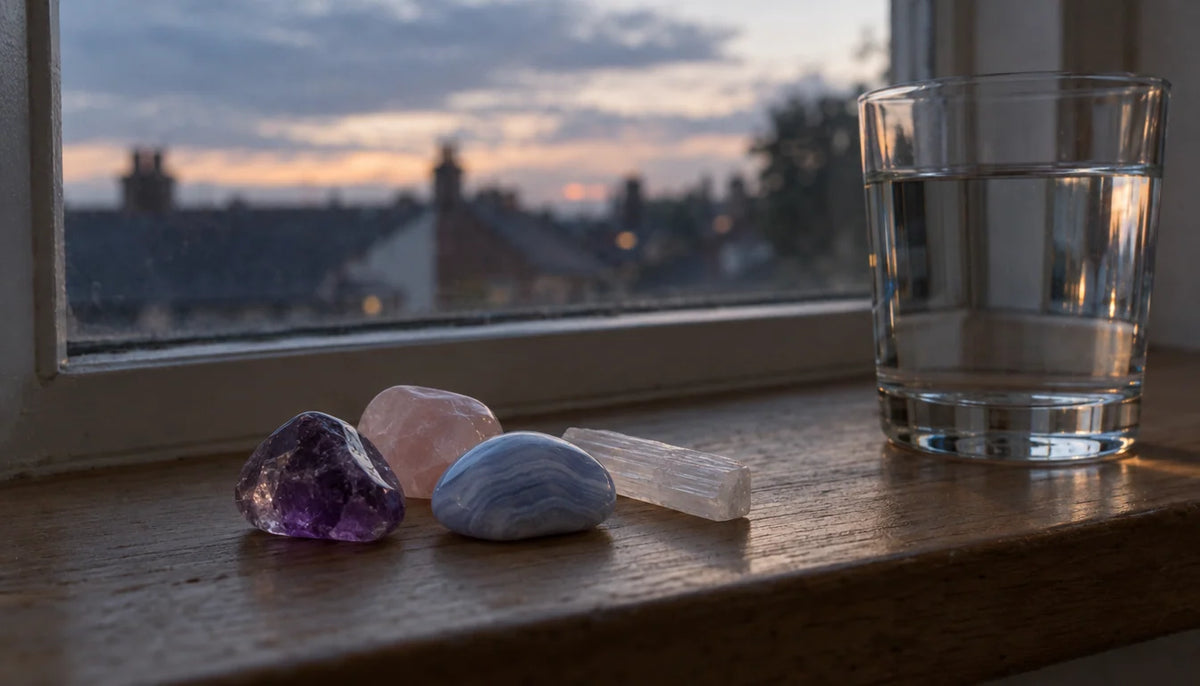
You're sitting with racing thoughts after a long day, and a cool stone feels good in your hand. The crystals for anxiety people use most are amethyst, lepidolite, rose quartz, black tourmaline, blue lace agate and selenite. In crystal traditions, each stone carries its own belief, and people use them as a quiet ritual.
Crystals are not a treatment for anxiety, though. Anyone who is struggling should talk to a doctor or a mental health professional.
Which crystals for anxiety and stress do people use most?
Across 6 popular picks, amethyst, lepidolite, rose quartz, black tourmaline, blue lace agate and selenite lead the list. These are the stones you'll see named again and again. Most people hold one in a hard moment or keep one close.
Picture a tense evening at 9 p.m. Your shoulders are tight, so you reach for the stone on your windowsill. It gives your hands and mind something steady to do.
Here's what most guides skip: "crystal traditions" means beliefs people have passed down over time. They aren't science. They're stories and habits many people find meaningful.
What does each calming stone mean in crystal traditions?
In crystal traditions, amethyst stands for calm and rose quartz for love and gentleness. Black tourmaline stands for protection (our post on signs of negative energy in your house explains that belief), and selenite for a fresh, clear feeling. These calming crystals carry beliefs, not proven effects.
Each stone also suits a different moment of the day:
- Amethyst: a purple form of quartz, a hard and common mineral. People reach for it at bedtime.
- Lepidolite: a soft, lilac mica, a mineral that forms in thin layers. Many save it for a tense work day.
- Rose quartz: a pale pink quartz. Some people hold it before a social event. Learn about rose quartz.
Blue lace agate is a banded, pale blue stone linked with gentle speech. Some tie it to the throat chakra, an energy center named in some spiritual traditions. Citrine, howlite, shungite and moss agate also show up on many lists of crystals for stress.
| Crystal | Traditional meaning | How to use |
|---|---|---|
| Amethyst | Calm | Hold it for a minute before sleep |
| Lepidolite | Ease and steadiness | Keep it on your desk on a busy day |
| Rose quartz | Love and gentleness | Carry it in a pocket before seeing people |
| Black tourmaline | Protection | Set it by the front door as a cue to pause |
| Blue lace agate | Gentle, honest speech | Hold it before a hard conversation |
| Selenite | A fresh, clear feeling | Keep it dry on a shelf for a quiet reset |
How do you use crystals in a calming routine?

A 1 to 5 minute routine pairs one stone with slow breathing. It's the simplest way to use crystals for anxiety, and it's easy to repeat.
- Sit down and rest your feet flat on the floor.
- Hold one stone in your hand.
- Breathe in slowly for a count of 4.
- Breathe out even more slowly, for a count of 6.
- Notice the stone's weight, temperature and edges.
- Finish with a sip of water.
For a bedside wind-down, keep a stone by the bed. Hold it for 1 minute before sleep. A stone in your pocket can also remind you to pause during the day.
When a tense moment hits, plant your feet and hold the stone. Then take 3 slow breaths. Some people pick amethyst for sleep or rose quartz for social nerves, but those pairings are personal choices.
For a first stone, choose the one whose look or story you like best. If anxiety feels serious, read the National Institute of Mental Health's page on anxiety disorders. Anyone in crisis can call or text 988.
Can you use a crystal water bottle as a pause-and-drink reminder?

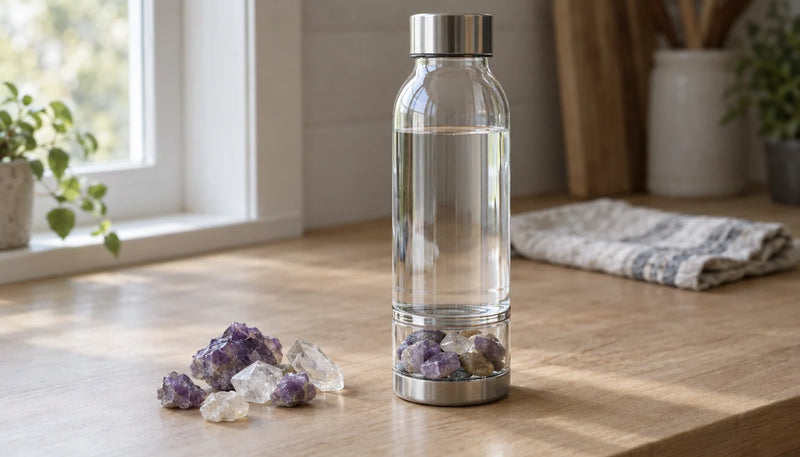
Yes, a bottle using the indirect method can be a 10-second cue to pause and drink. In the indirect method, stones sit in a sealed chamber in the base. A glass divider keeps them apart from the water.
The simple version: the bottle doesn't change the water or your body. It's a cue. You see the stone, take a breath and sip.
Why this matters: some stones should never sit in drinking water. Mindat, a mineral reference site, lists gypsum as soft and slowly soluble in water. Selenite is a form of gypsum, so it can wear away when wet.
Other minerals can rust or shed material too. A sealed chamber keeps every stone out of what you drink.
How do you cleanse and charge your stones?
A 30-second reset is enough. In crystal traditions, "cleansing" means a personal reset ritual, not physical cleaning. People use moonlight, a soft cloth or a quiet intention.
"Charging" is the same idea: a moment to set a fresh intention with the stone. Wipe it, hold it for 30 seconds and pick 1 word for the week.
Stones sealed in a bottle's base chamber need no cleaning. Some people still set the bottle under moonlight as a personal tradition.
Here's the catch with sunlight. Amethyst can fade in direct sun. A moonlit windowsill is the gentler choice.
What does the research say about crystals and anxiety?

A 2025 randomized trial of 138 adults in CNS Spectrums found rose quartz worked no better than glass. The look-alike glass stone did just as well over the same 14-day routine. Research has not shown that crystals have health effects.
In that trial, anxiety dropped only among people who already believed in crystals. It didn't matter which stone they got. The authors concluded any change came from expectation.
The breathing part has more support. A 2023 meta-analysis in Scientific Reports linked breathwork to lower stress across 12 studies and 785 people. It also linked breathwork to lower anxiety across 20 studies, with small to medium effects that varied a lot.
So if you enjoy crystals for anxiety as a ritual, that's fine. A habit you like can still feel good.
What else helps with anxiety, and when should you get help?
The National Institute of Mental Health points to a family doctor as the first step for lasting anxiety. Slow breathing, a walk, regular sleep and talking to someone you trust help many people too. They work with or without a stone.
Anxiety disorders differ from everyday worry. The National Institute of Mental Health's anxiety fact sheet says the anxiety doesn't go away and shows up in many situations. It lasts at least 6 months and can get worse.
After the family doctor, the next step is usually a mental health professional. Crystals for anxiety can't stand in for that step.
NIH MedlinePlus Magazine lists common symptoms like a faster heart rate, rapid breathing and dizziness. Trouble concentrating and avoiding places also count. If symptoms last, get worse or disrupt daily life, contact a health care provider.
Anyone in crisis can call or text 988, the Suicide & Crisis Lifeline. Call 911 in a life-threatening situation.
If someone you love is anxious, listen more than you fix. Gently encourage them to see a doctor.
Where Gemstone Well fits
Gemstone Well makes the De-Stress bottle, which pairs amethyst and clear quartz. It suits anyone who wants a calm reminder to pause and drink.
The Elixir2Go is a glass bottle with 2 chambers. The stones sit in a sealed chamber in the base. A glass divider keeps them apart, so they never touch the water.
The bottom cap unscrews so you can change the stones. In crystal traditions, amethyst is linked with calm. The bottle simply keeps a stone you like in view. Browse it in the shop by energy collection.
See the crystal water bottles →
The Bottom Line
The 6 stones here are a calming ritual and a belief, not a treatment. Amethyst, lepidolite, rose quartz, black tourmaline, blue lace agate and selenite each carry a story. Keep the habits that matter: slow breathing, a pause and a sip of water.
If anxiety is getting in the way of your days, talk to a doctor or a mental health professional.
FAQ
Are crystals a treatment for anxiety?
No. Crystals are a ritual and a belief, not a treatment. Anyone struggling should talk to a doctor or a mental health professional.
Which crystal should a beginner start with?
Pick the one whose look or story you like best. Amethyst, linked with calm in crystal traditions, is a common first choice among crystals for anxiety.
Can you put amethyst or selenite straight into your drinking water?
Selenite should never sit in drinking water because it's soft and slowly dissolves. A bottle using the indirect method keeps every stone in a sealed chamber away from the water.
How long should a calming stone routine take?
One to five minutes is enough. Breathe in for 4 and out for 6, then finish with a sip of water.
When should you talk to a doctor about anxiety?
Talk to one if symptoms last, get worse or disrupt daily life. In a crisis, call or text 988, or call 911 if a life is in danger.

The Gemstone Well team writes about crystal water bottles, gemstone meanings and simple daily rituals. About us