GEMSTONEWELL
Citrine Meaning and Uses
What citrine is, what it means in crystal traditions, how people use it, how to spot heated amethyst sold as citrine, and how to care for it.
 By Gemstone Well
Published
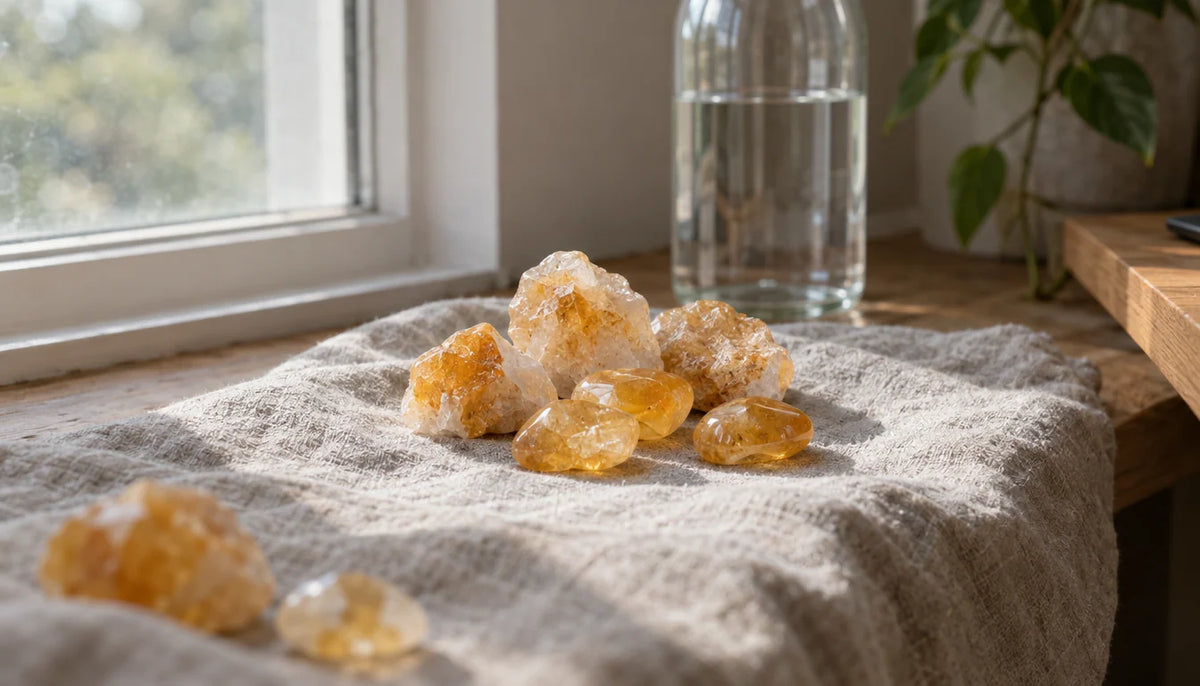
You've just picked up a glowing yellow stone at a crystal shop. Now you want to know what it means and how it's used. In crystal traditions, the citrine meaning centers on abundance, warmth and confidence.
People use citrine on a desk, in a wallet, beside a sealed-chamber water bottle or in meditation. Citrine is the yellow-to-orange kind of quartz. Much of what's sold as citrine is really heated amethyst.
Every citrine meaning here is a tradition and a belief. It isn't a proven effect.
What is the citrine meaning, and what is it used for?
In crystal traditions, citrine stands for abundance, warmth and confidence, which fits its sunny, lemon-yellow color. Our post on crystals for energy, focus and confidence covers where people keep it. Common spots include a desk, a wallet, a bottle's sealed chamber and a meditation corner.
Citrine's old nickname is "the merchant's stone." The American Gem Society's citrine overview links it with prosperity, joy and optimism. The society says people wore citrine jewelry back in ancient Greece and Rome.
Folklore said citrine could draw wealth and success, build confidence and keep negative energy away. Ancient Egyptians used it as talismans. The American Gem Society calls those tales lore, not fact.
That's a fair way to hold any citrine stone meaning. Research hasn't shown that crystals have health effects. So the citrine crystal benefits people describe are personal: a ritual, a goal reminder, a bit of color.
What is citrine, and how is it different from amethyst?

GIA, the Gemological Institute of America, calls citrine the see-through, pale yellow to brownish orange variety of quartz. A "variety" just means the same mineral in a different color. GIA says a trace of iron gives citrine its yellow to orange color.
Quartz is silicon dioxide, a compound of silicon and oxygen. Britannica's quartz entry gives it a Mohs hardness of 7. The Mohs scale ranks scratch resistance from 1, soft talc, to 10, diamond.
Citrine has two close cousins. Amethyst is purple quartz, and smoky quartz is brown-gray quartz. Same mineral, different colors.
The meaning of the name citrine is simple. It comes from citron, the French word for lemon. You pronounce citrine as "SIT-reen."
The American Gem Society says the word was first used in 1385 for yellow gemstones. Geology.com says reddish orange and reddish brown citrine is rare. That shade is often called Madeira citrine.
Before modern gemology, GIA says, citrine's tawny color got it confused with topaz. That mix-up still shapes the citrine meaning some sellers use today.
How can you tell real citrine from heated amethyst?
Natural citrine is rare, says GIA's citrine description. So most citrine sold comes from heat-treating amethyst. Heat turns pale violet stones yellow.
Here's the catch. Mindat says amethyst turns yellow, orange or brown above roughly 300 to 400 °C. Mindat adds that heated amethyst is often wrongly sold as citrine.
GemSelect suggests a few signs of heat treatment:
- Color that looks very orange or reddish
- Uneven color across one stone
- A white base on points or clusters
- A cluster base that still looks purple
- A whole batch in the same bright orange
Natural citrine tends to show softer yellows. GemSelect says its color is usually more even.
Heated stones aren't fakes. GemSelect says heat-treated quartz is still natural, not synthetic, and it can look beautiful.
Geology.com lists 5 market types of citrine. They are natural color, treated natural color, heated light amethyst, synthetic and imitation. Sellers should say when a stone is treated, so just ask.
Is citrine expensive? Usually not. Geology.com says citrine costs much less than topaz, which rates 8 on the Mohs scale.
Rare natural stones tend to be pale. Cheap, bright ones are usually treated.
How do people use citrine at home?

Most citrine uses are simple and daily. Our page on citrine meaning and how to use it shares ideas for work spaces. Many people keep a tumbled stone on a desk as a confidence cue.
Here are the common spots:
- Desk: a small stone near your keyboard as a focus reminder.
- Wallet or bag: a pocket token, tied to the merchant's stone tradition.
- Entryway or bedroom: a point on a shelf as a warm welcome or evening cue.
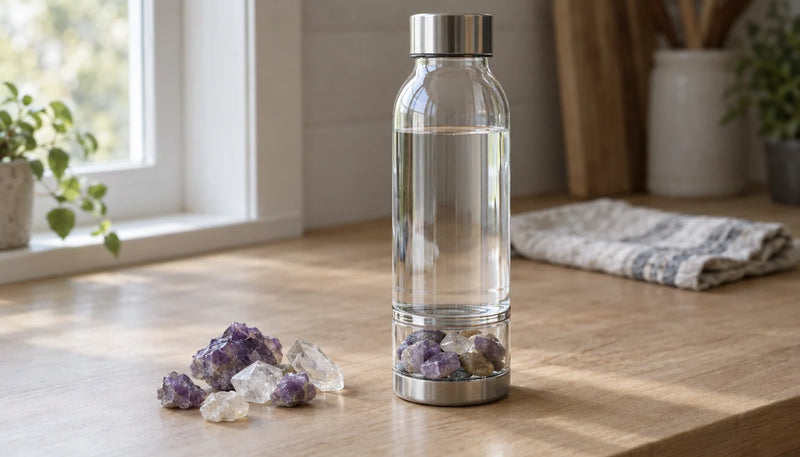
Some people keep citrine in an indirect-method bottle. The indirect method means stones sit in a sealed chamber, apart from the water. The post on which crystals can go in water explains which stones are safe.
In meditation, people hold the stone and set an intention. A chakra is an energy center in some spiritual traditions. The citrine crystal spiritual meaning ties it to the solar plexus chakra, and less often the sacral chakra.
Citrine also shows up in jewelry. National Jeweler says the jewelry trade made it a November birthstone in 1952. It shares the month with topaz.
Skip the sunny windowsill. Sun fades it.
Can citrine go in water, and how do you care for it?

Yes, citrine can take a quick rinse or short dip in plain water. The University of Minnesota's quartz page says quartz has no cleavage. Cleavage means natural planes where a mineral splits.
The same page says quartz doesn't dissolve in water at normal conditions. The simple version: water won't break it down. Still, skip long soaks, salt water, pool water and harsh cleaners.
Sun is the bigger risk. Mindat says long sunlight slowly fades amethyst. UV light destroys its color centers, the tiny spots in the crystal that create color.
Since much citrine began as amethyst, keep it out of harsh light. Pat it dry after rinsing. Our guide on how to cleanse and charge crystals covers other gentle methods.
Drinking water is different. So can citrine go in water you drink? Use a sealed, separate chamber so stones never touch it.
Some stones must stay out of water entirely. Selenite dissolves, malachite contains copper that can be toxic, and pyrite can rust. Don't drop loose stones into drinks. Take health questions to a doctor.
Citrine facts at a glance
This table sums up the citrine crystal meaning, geology and care tips from GIA, Geology.com and crystal traditions.
| Feature | Detail |
|---|---|
| Type | Variety of quartz |
| Color | Yellow to orange to orangy red |
| Hardness | Mohs 7 |
| Traditional meaning | Abundance, warmth, confidence |
| Chakra | Solar plexus |
| Birthstone | November, since 1952 |
| Water safety | Quick rinse is fine; sealed chamber for drinking |
| Sun sensitivity | Can fade in strong sun |
| Typical price | Affordable compared with topaz |
The citrine meaning row reflects tradition. The other rows reflect the mineral itself.
Where Gemstone Well fits
A sealed chamber keeps citrine simple in a daily water ritual. Gemstone Well makes the Energy bottle, with citrine, blue apatite and clear quartz in a sealed base chamber. A glass divider keeps the stones apart from the water.
It suits someone who likes the citrine meaning of warmth and wants a small cue at each refill. The bottle is lead-free borosilicate glass, a heat-resistant glass used in lab tools. The bottom cap unscrews so you can change the stones.
For a desk, the Prosperity and Abundance grid kit uses 4 citrine and 4 green aventurine tumbles. A tiger's eye point sits in the center of an Infinity grid cloth. It's a calm way to set an intention.
You can browse both in the shop by energy collection.
The Bottom Line
The citrine meaning in crystal traditions is abundance, warmth and confidence. Most citrine you'll see is heated amethyst, which is still natural. A quick rinse is fine, but keep it out of harsh sun.
For drinking water, use a sealed chamber. The stone stays dry.
See the crystal water bottles →
FAQ
What does citrine crystal symbolize?
In crystal traditions, citrine symbolizes abundance, warmth and confidence. It's called the merchant's stone. The American Gem Society calls the wealth tales lore, not fact.
Can citrine go in water?
Yes, for a quick rinse in plain water, since quartz doesn't dissolve. For drinking water, use a sealed chamber so the stone never touches it.
Where should you keep citrine in your home?
People often keep it on a desk, in a wallet, in an entryway or in a bedroom. Avoid a sunny windowsill, since strong sun can fade it.
Is citrine an expensive stone?
Usually not. Geology.com says it costs much less than topaz, and cheap bright stones are often heated amethyst.
How do you know if citrine is real?
Natural citrine tends to be a soft, even yellow. Very orange color, uneven color or a white or purple base suggest heated amethyst, so ask the seller whether it was treated.

The Gemstone Well team writes about crystal water bottles, gemstone meanings and simple daily rituals. About us