GEMSTONEWELL
Can Amethyst Go in Water? Which Crystals Can, and Which Never Should
Yes, amethyst can go in water. See which crystals are safe in water, which soft or toxic stones must stay dry, and the safest way to make crystal water.
 By Gemstone Well
Published
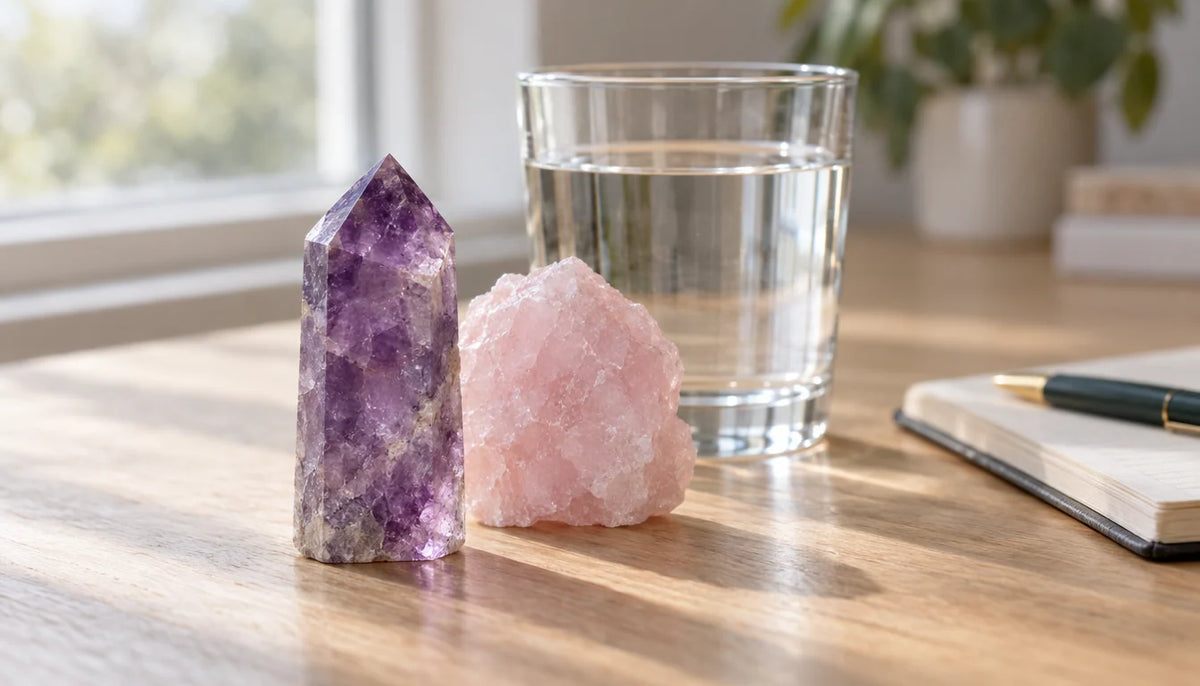
Can amethyst go in water? Yes. Amethyst and rose quartz are both quartz, which rates 7 on the Mohs hardness scale, so a rinse or a short dip in plain water won't hurt them. A bottle with crystals inside is also safe to drink from, as long as the stones sit in a sealed chamber away from the water.
Not every crystal is that easygoing, though. Selenite, malachite and pyrite should never go in water. Water damages them, and some can release things you shouldn't drink.
Can amethyst go in water, and rose quartz too?

Yes. Both are colored kinds of quartz, as Wikipedia's quartz entry explains, and their colors come from tiny traces of other elements inside the crystal. So the question "can rose quartz go in water?" is really a question about quartz.
Quartz is the mineral that sets the 7 mark on the Mohs scale, a scratch test that compares how hard materials are. It also has no easy cleavage, meaning no natural flat planes where it likes to split. Water won't hurt it.
Safe ways to get quartz wet:
- A quick rinse under the tap
- Mild soap and lukewarm water
- A little rain
Skip long soaks, salt water, pool water and harsh cleaners. The same goes for citrine and clear quartz, which belong to the same quartz family.
The real risk for amethyst is sunlight, not water. GIA, the Gemological Institute of America, explains that amethyst gets its purple from natural radiation acting on iron, and some stones fade after long hours in strong light. Dry it after washing and keep it out of harsh sun.
Which crystals should never go in water?
Selenite, malachite and pyrite should stay dry, each for a different reason. One dissolves, one contains copper and one breaks down when it meets water and air.
Selenite is the clear crystal form of gypsum, a soft mineral that rates just 2 on the Mohs scale. Gypsum dissolves in water at roughly 2 grams per liter at room temperature, so a piece of selenite left soaking slowly wears away.
Pyrite looks like shiny gold, but keep it out of your glass. The U.S. Geological Survey's report on pyrite oxidation explains that pyrite reacts with oxygen and water and releases dissolved iron, sulfate and acid. The Food and Agriculture Organization of the United Nations adds that wet pyrite can free iron and aluminum in toxic dissolved forms.
Malachite is a copper mineral, listed by GIA as a copper carbonate. Copper isn't something you want soaking into your drinking water.
A good rule: if a stone is soft, dissolves, looks metallic or crumbles, keep it dry.
Does the Mohs hardness rule tell you everything?
No. A rating of 7 or higher helps, but it doesn't settle the question on its own. The usual rule of thumb says harder stones handle short contact with water better, and Britannica's quartz article confirms that quartz rates 7 and has no easy cleavage.
Fluorite shows where the rule falls short. It rates only 4 and splits easily in four directions, so it chips and cracks if you're not careful.
Here's what most guides skip: hardness says nothing about toxicity. A hard stone can still contain something you shouldn't drink.
A few special cases to watch for:
- Raw clusters with cracks that trap water and grime
- Jewelry, where the glue or metal often fails before the stone does
- Treated or dyed stones, whose color can wash out
For stones like moonstone or peridot, look each one up by name instead of trusting hardness alone. When in doubt, keep it out of your drinking water.
Crystal water safety chart: stone, safe or not, and why

Quartz-family stones are fine in plain water. Soft, soluble or metallic stones are not.
| Stone | Safe in plain water? | Why |
|---|---|---|
| Amethyst | Yes | Quartz, Mohs 7, no easy cleavage |
| Rose quartz | Yes | Quartz, Mohs 7, no easy cleavage |
| Citrine | Yes | Quartz family |
| Clear quartz | Yes | Quartz family |
| Selenite | No, keep dry | Mohs 2 gypsum that dissolves in water |
| Malachite | No, keep dry | Copper carbonate mineral |
| Pyrite | No, keep dry | Reacts with water, releases iron and acid |
| Fluorite | Better kept out | Mohs 4, brittle, splits easily |
| Moonstone | Check first | Not quartz; look up your stone by name |
| Peridot | Check first | Not quartz; look up your stone by name |
Think about the situation too. A quick rinse suits quartz. Long soaks, showers, pools and the ocean add time, chemicals and salt. Jewelry has settings to think about. And gem water is the strictest case of all, because you drink it.
Direct or indirect: how do you make a crystal elixir safely?
An elixir is water that has sat near a stone as part of a ritual. There are two ways to make one, and the indirect method is the safest. GemSelect's gemstone elixir guide describes both. With the direct method, the stone sits in a glass of spring water overnight. With the indirect method, it sits in a small sealed glass jar placed inside the water, so it never touches what you drink.
GemSelect also suggests skipping obscure, crumbly, flaky, man-made or dyed crystals altogether. Amethyst, rose quartz and clear quartz are generally considered non-toxic, but some gemstones do contain harmful substances. Direct is fine for quartz. Indirect simply takes the worry away for every stone.
- Rinse the stone until the dust is gone.
- Place it in a small glass jar and seal the lid.
- Set the jar inside a larger glass of spring water. The water surrounds the jar but never reaches the stone.
- Leave it overnight, or as long as your ritual calls for. In crystal traditions, this is the time for setting an intention.
- Take the jar out and enjoy the water. Dry the stone and store it away from strong sun.
If the stone is still dry inside the jar and the water looks exactly as it did before, you did it right.
To be honest about it, research hasn't shown health effects from gem water. Take any health questions to your doctor.
Is it safe to drink from a bottle with crystals inside?
Yes, when the stones never touch the water. With loose stones in the water, it depends entirely on what the stone is made of.
A two-chamber bottle sidesteps the question. Some crystal bottles hold the stones in replaceable glass pods, and that kind of design keeps anything in the stone from leaching into your water. The practical check is simple: look for a sealed, separate chamber. And avoid loose stones in drinking water unless you know they're quartz, like amethyst or clear quartz.
Gemstone Well option: the Crystal Water Bottle Elixir Set. The stones sit in a separate chamber, so they never touch the water you drink. It's the indirect method built into a glass bottle. To change stones, unscrew the bottom cap, swap them and screw it back on.
It suits someone who enjoys a daily elixir ritual, or anyone who'd rather not think about which stone is safe. For the ritual itself, see Gemstone Well's crystal elixirs page.
The Bottom Line
Amethyst, rose quartz, citrine and clear quartz are quartz stones that handle water well. Selenite, malachite and pyrite stay dry because they dissolve, contain copper or react with water. Hardness helps but doesn't settle the question on its own. The indirect method, or a sealed chamber, keeps every stone away from your water.
FAQ
Can citrine and clear quartz go in water too?
Yes. Both are quartz, so a rinse or short dip is fine. Dry them afterward.
Can moonstone or peridot get wet?
A quick wipe is usually fine. Look each stone up by name before soaking it, and use the indirect method for drinking water.
Is it safe to leave a crystal in my drinking water overnight?
Many people do it with known quartz stones. For anything else, seal the stone in a glass jar inside the water.
Can I put crystals in the shower or a bath?
Quartz can handle a splash. Keep selenite, malachite, pyrite and fluorite out, and keep soaps and bath salts off any stone.
How do I dry amethyst after washing it?
Pat it with a soft cloth and let it air dry indoors, out of strong sun, since some amethyst fades.
Does a crystal elixir have proven health effects?
No. A crystal elixir is a tradition and a mindful ritual, not a medical treatment.
See the crystal water bottles →
This guide is educational; crystal meanings are traditions, not medical advice. It includes links to Gemstone Well products.
Related guide: Selenite: Meaning, Uses and Care

The Gemstone Well team writes about crystal water bottles, gemstone meanings and simple daily rituals. About us