GEMSTONEWELL
Selenite: Meaning, Uses and Why It Cleanses Other Crystals
Selenite is a soft, clear form of gypsum that traditions use to cleanse other crystals. Learn what it is, how to use it, and why it must stay dry.
 By Gemstone Well
Published
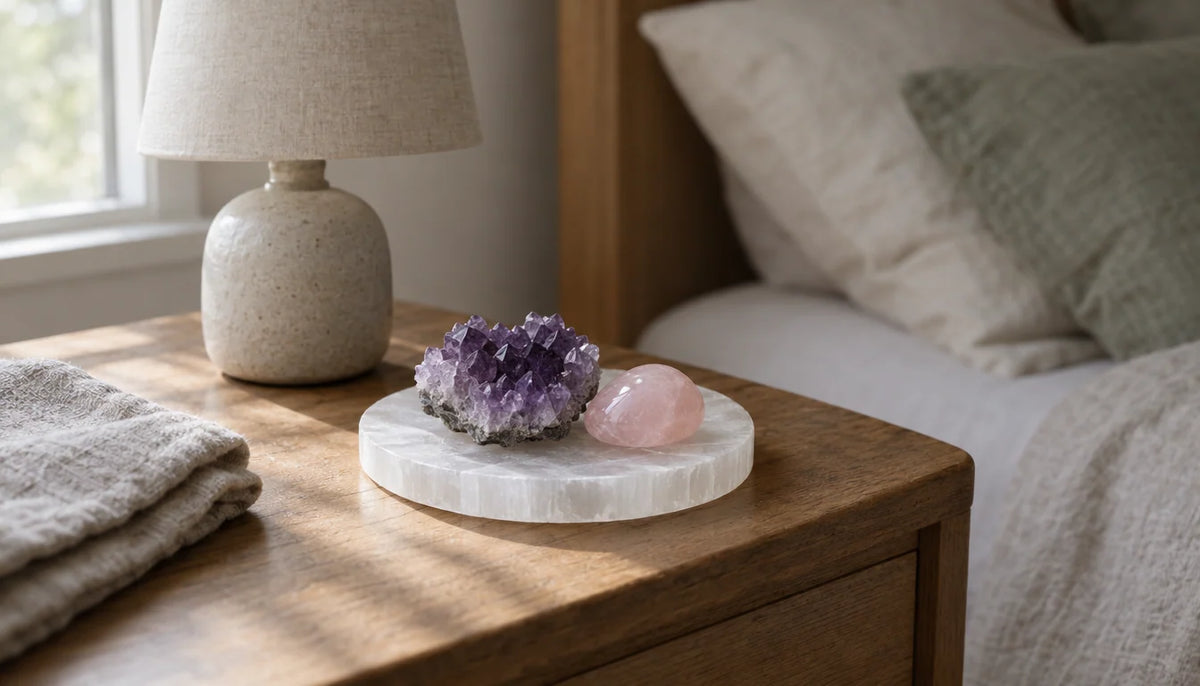
Selenite is the clear, satiny form of gypsum, a soft and common mineral. It is named after Selene, the Greek goddess of the Moon. In crystal traditions, it is the stone people use to cleanse and recharge their other crystals. It is also so soft that you can scratch it with a fingernail, and it slowly dissolves if it sits in water.
So you keep it dry.
Maybe you just bought a smooth white wand at a crystal shop. Or a friend told you to rest your stones on a selenite plate overnight. Either way, it helps to know what you are holding, and the one big rule that comes with it. Water ruins it.
What is selenite?
Wikipedia's entry on selenite calls it the mostly clear, see-through form of gypsum.
Gypsum is calcium sulfate, a mineral made of calcium, sulfur and oxygen. It also holds two water molecules locked inside its crystal structure. That water is part of the stone itself. It is not damp sitting on the surface.
Gypsum is the same mineral that goes into plaster, drywall and some blackboard chalk, which tells you how soft and ordinary it really is.
Selenite can also form thin, flat sheets that look like mica, a mineral that splits into see-through flakes. People once used these sheets as window panes. The old Basilica of Santa Sabina in Rome is one well-known example.
Where does the name selenite come from?
The name comes from the Moon. Wiktionary's entry on the word selenite traces it to selene, the ancient Greek word for the Moon.
In Greek myth, Selene was the goddess of the Moon. The stone's pale glow suits her.
People often mix it up with selenium, a chemical element. Selenite has no real amount of selenium in it. The two words just share the same Greek root, and their chemistry has nothing in common.
The moon link shapes how crystal lovers describe the stone. Its glow is called soft, calm and clear, like moonlight on a quiet night.
How hard is selenite, and why does water ruin it?
The Mohs scale ranks how easily a mineral scratches, from 1 for the softest to 10 for the hardest. Gypsum is the mineral used to mark 2 on that scale. At 2, even your fingernail can leave a mark.
Selenite crystals bend a little, too. Bend one too far, though, and it snaps. It won't spring back on its own.
Water is the bigger problem. Gypsum slowly dissolves in water, so a piece that gets wet again and again will pit, turn cloudy and lose its shine. Even the steam in a bathroom can dull the surface over time.
Care for it like this:
- Never put it in water or soak it, even for a moment.
- Never bury it in salt or cleanse it with salt.
- Keep it out of damp rooms like bathrooms and kitchens.
- Dust it gently with a soft, dry cloth.
An elixir is water that a stone has soaked in. Selenite never belongs in an elixir or in a water bottle.
Clear quartz is a very different stone. Britannica's entry on quartz rates quartz at 7 on the Mohs scale. That is hard enough to scratch glass. Quartz is made mainly of silica, also called silicon dioxide, and it holds up well in water.
| Selenite | Clear quartz | |
|---|---|---|
| Hardness (Mohs) | 2, scratches with a fingernail | 7, scratches glass |
| Water | Dissolves and pits; keep dry | Holds up to water |
| Common use | Charging plates, wands, grids | Points, jewelry, grids |
Is your selenite real, or is it satin spar?

A lot of what shops sell as selenite is really satin spar. Wikipedia explains that the name selenite is often used loosely for other kinds of gypsum.
Satin spar is the silky, stringy form of gypsum. It is white and milky, with a pearly shine. True selenite is usually clear, like thick glass, and light passes right through it.
You can check without any tools: hold the piece up to a window or a lamp and look at how the light comes through. Clear and glassy means selenite. Silky, stripy and milky means satin spar.
Both are gypsum, and both rate 2 on the Mohs scale. So the same dry care works for either one. Desert rose and gypsum flower are two more gypsum forms you may see in shops.
Where do giant selenite crystals come from?
Some of the largest crystals on Earth are selenite. Wikipedia notes they can grow up to 39 feet (12 m) long.
The most famous ones are in Naica, Mexico. Miners found a cave full of them in 2000, about 1,000 feet (300 m) underground.
How did they get so big? An article in the chemistry journal ACS Central Science explains that they grew in hot water full of dissolved minerals. That water stayed just under about 136 °F (58 °C) for a very long time. Steady heat and a lot of time let the gypsum build crystals taller than a house.
What do crystal traditions say selenite does?
In crystal traditions, selenite's meaning centers on cleansing and charging other crystals. It is also linked with calm and clarity.
Cleansing, in these traditions, means clearing a stone of energy it has picked up. Charging means refreshing a stone so it feels ready to use again. Many people set amethyst, rose quartz or other crystals on a selenite plate overnight for this. The moonlike glow also ties it to a calm mind and clear thinking.
These are beliefs, and research has not shown that crystals have health effects. EBSCO's research overview of crystal healing calls it pseudoscience with little support from clinical trials. It links any stress relief people report to the placebo effect, or to the meditation that often goes with it. Take health questions to a doctor.
How do people use selenite at home?
Most people keep selenite in a dry, quiet spot where it can rest. Because it is so soft, handle it gently.
Here are common ways people use it:
- A charging plate or bowl, with other crystals resting on top.
- A wand, held during a quiet moment or set on a shelf.
- By the bed, on a dry nightstand away from any glass of water.
- In a grid, which is a set of crystals laid out in a pattern for an intention.
Pick a dry room like a bedroom, office or living room. Skip bathrooms and kitchens, since damp air slowly damages this soft stone.
The plate under your stones has to stay bone dry, too. Dry your other crystals before you set them on it, and never rinse the plate.
If you like pairing crystals with water, pick stones that can handle it. Gemstone Well's guide on which crystals can go in water walks through the safer picks.
Where Gemstone Well fits
Gemstone Well makes Elixir2Go glass water bottles with a separate chamber for the stones. A glass wall keeps the stones apart, so they never touch the water you drink.
Every bottle comes with clear quartz. Many pair it with another quartz stone, such as amethyst, rose quartz or smoky quartz. Quartz is a hard family of minerals made mainly of silica. At 7 on the Mohs scale, it is far tougher than gypsum at 2, so it is a better fit for a daily water ritual. You can browse the bottles by intention in the Shop By Energy collection.
Keep selenite out of the bottle, even out of the separate chamber. Let it stay on your nightstand as a charging plate instead.
A simple routine pairs the two. Rest the bottle's quartz stones on a dry selenite plate overnight. In the morning, put them back and fill the bottle.
In short
Selenite is a soft, clear form of gypsum named for Selene, the Greek moon goddess. It rates just 2 on the Mohs scale. Traditions call it a cleansing stone for other crystals and link it with calm and clarity.
Much of what is sold as selenite is satin spar, but the care is the same. Keep it dry, skip salt, and dust it with a soft cloth.
FAQ
Can selenite go in water?
No. It is a form of gypsum, which dissolves and pits in water. Keep it dry, and never use it in a water bottle or an elixir.
Is it safe to touch?
Yes, you can handle it with dry hands. It is very soft, at 2 on the Mohs scale, so it scratches easily.
Where should I keep it at home?
Pick a dry room like a bedroom or office. Avoid bathrooms and kitchens, where damp air can damage it.
Is satin spar the same thing?
Both are gypsum, but satin spar is white, stringy and pearly. True selenite is clear, and the same dry care works for both.
How do I use selenite to cleanse my other crystals?
Set your dry crystals on a selenite plate or bowl overnight. In crystal traditions, this clears and refreshes them.
Crystal meanings here are traditions, not medical advice. This article links to Gemstone Well products.

The Gemstone Well team writes about crystal water bottles, gemstone meanings and simple daily rituals. About us