GEMSTONEWELL
Crystal Healing: What It Is, What It Is Not, and How to Start
Crystal healing explained honestly: what it is, what research shows, what popular crystals traditionally mean, and how to start with one stone.
 By Gemstone Well
Published
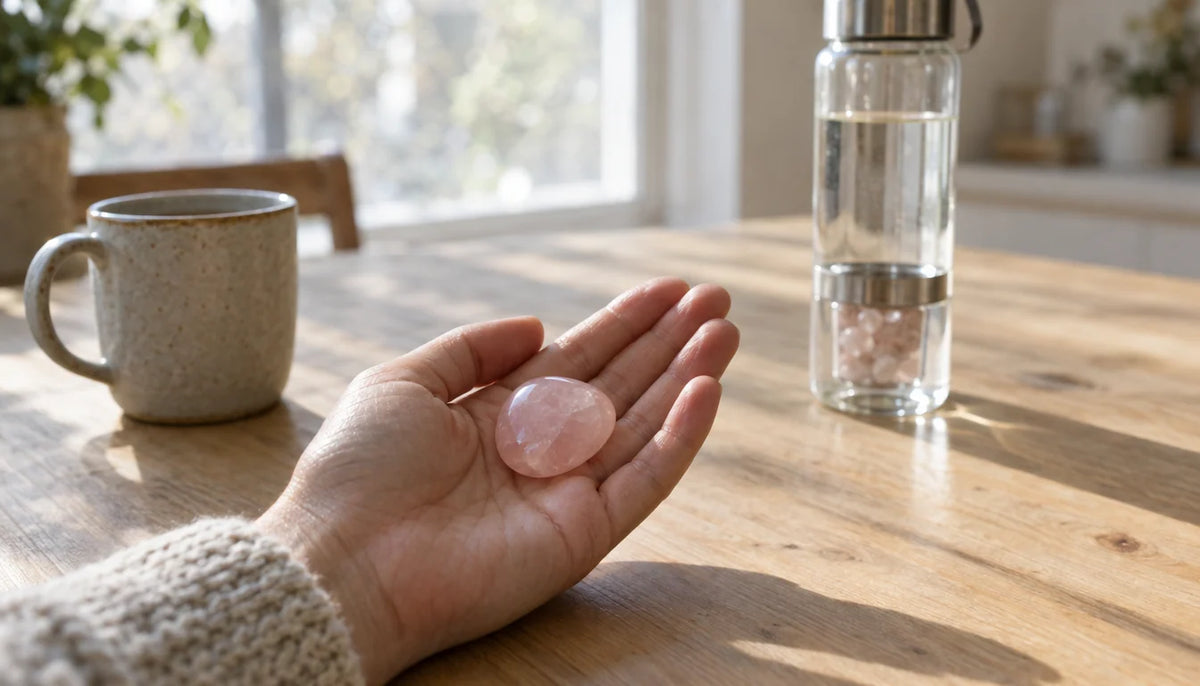
Maybe a friend gave you a stone, or you picked one up at a market, and now you're not sure what to do with it. You're in good company. A Pew Research Center survey found that 12% of Americans own crystals for spiritual reasons.
The six most popular stones are amethyst, rose quartz, citrine, clear quartz, black tourmaline and selenite. In crystal traditions, each one stands for an idea: calm, love, cheer, clarity, protection and a fresh start. To choose one, start with your intention. Then think about the stone you're drawn to and how much care it needs.
The easy way in is to pick one stone, give it a meaning, and build a small daily habit around it.
What is crystal healing, and what is it not?
Crystal healing means placing or carrying stones with an intention. An intention is a short goal you want to keep in mind. The practice comes from old traditions. People hold a stone, wear it, or keep it nearby as a reminder of something they want more of in their life.
Some traditions link stones to chakras. Chakras are energy centers that some belief systems place along the body. Others pair stones with Reiki, an energy practice done with a light touch or no touch at all.
What crystal healing is not is a treatment. Wikipedia's entry on crystal healing notes there's no scientific basis for claims that stones have healing powers. For any health concern, see a doctor.
So why do so many people keep their stones? For many, a stone is a calm pause in a busy day. It can be a reminder of a goal, or simply a beautiful thing to look at.
What does the research say?
Research has not shown that crystals have health effects beyond placebo. Placebo means feeling better because you expect to. In a randomized study in CNS Spectrums, 138 adults got either polished rose quartz or a fake stone that looked the same.
The trial was led by Escolà-Gascón and colleagues and ran for 14 days. The real crystal did no better than the fake. People who already believed in crystals felt a change, and they felt the same change with either stone.
The authors said expectation and conditioning drove those changes. Conditioning means habits of response we learn over time.
That doesn't make the ritual pointless. A quiet two-minute pause with a stone you love can be pleasant for its own sake.
Skeptics and believers are both welcome here. Some people see their stone as part of their faith. Others just like a pretty object on the desk.
What do the most popular crystals mean?

Pew Research Center's survey of spiritual beliefs found that 26% of U.S. adults say crystals can hold spiritual energy. That belief was more common among people who call themselves spiritual but not religious. Among them, 42% said yes, compared with 24% of religious Americans.
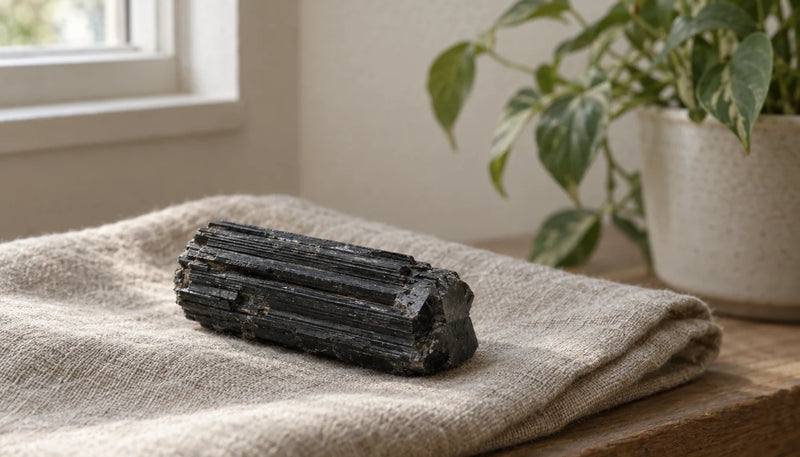
In crystal traditions, amethyst stands for calm and rose quartz for love. Citrine stands for cheer, and clear quartz for clarity. Black tourmaline stands for protection, and selenite for a clean slate.
Many of these meanings come from how a stone looks. Soft pink rose quartz suggests tenderness. Sunny yellow citrine suggests warmth, and black tourmaline brings to mind a shield.
| Crystal | Traditional meaning | Care |
|---|---|---|
| Amethyst | Calm and peace | Quartz, Mohs 7; can fade in strong sun; avoid sudden heat changes |
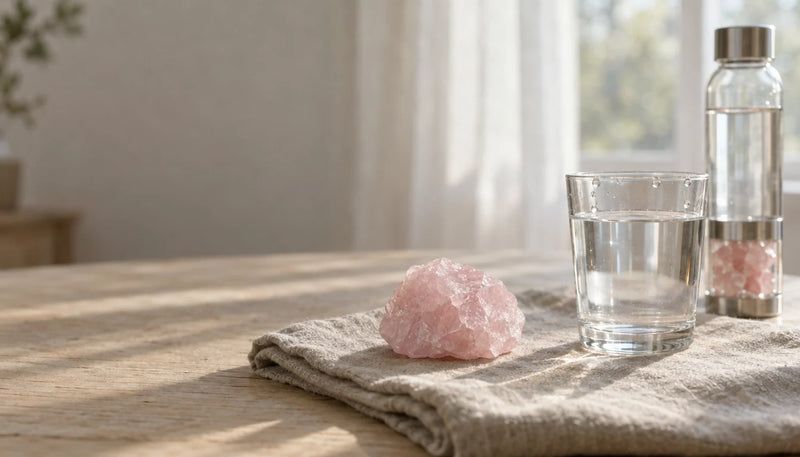
| Rose quartz | Love and self-kindness | Quartz, Mohs 7; keep out of strong sun |
| Citrine | Cheer and confidence | Quartz, Mohs 7; can fade in strong sun |
| Clear quartz | Clarity and focus | Quartz, Mohs 7; hardy and easy |
| Black tourmaline | Protection | Sturdy; easy to care for |
| Selenite | A clean slate | A form of gypsum, Mohs 2; soft, keep it dry |
How do you choose your first crystal?
There are three easy ways to choose. Most people use a mix of all three.
- By intention: ask what you'd like a daily reminder of, such as calm or confidence.
- By what draws you: trust the color, feel or shape you keep reaching for.
- By care needs: choose a hardy stone if you don't want any fuss.
If you want a calm start, rose quartz or amethyst are good picks. If nothing stands out, clear quartz is a safe choice. Here's a handy fact. Amethyst, citrine, rose quartz and clear quartz are all forms of quartz, according to the U.S. Geological Survey's gemstone guide.
Quartz scores 7 on the Mohs scale, which rates how well a mineral resists scratches from 1 to 10. On the National Park Service's Mohs hardness page, talc is 1 and gypsum is 2. That makes it tough enough to carry and handle every day.
Small tumbled stones are smooth, polished pebbles. They and starter sets don't cost much. Watch out for dyed stones with flat, even color. Glass fakes often have tiny round bubbles inside.
How do you start with crystals?

You can start in about two minutes a day. Try this simple routine.
- Pick one stone.
- Set one intention, such as "I want to slow down."
- Carry it, or keep it where you'll see it.
- Hold it, breathe slowly, name your intention, and set it down.
A short meditation works the same way. Sit comfortably and hold the stone in your palm. Breathe in for four counts and out for four. Notice how heavy and cool it feels, then stop after a few minutes.
As you get more into it, you may hear about layouts and grids. A layout means placing stones on the body while you lie down. A grid means setting stones out in a pattern on a table or shelf. Both are traditions you can try for fun.
How do you clean and care for crystals?
The Gemological Institute of America (GIA) says amethyst can be washed in warm soapy water, but you should avoid steam and heat. The GIA amethyst care guide rates it 7 on the Mohs scale, though harder stones can still scratch it. For step-by-step rituals, read our post on how to cleanse and charge crystals.
In crystal traditions, "cleansing" means a symbolic reset, not washing off dirt. Moonlight and sound, like a ringing bell, are safe for almost any stone. The CNS Spectrums paper tied crystal effects to what people expect. So you can think of cleansing as a way to refresh your own intention.
Match the physical care to the stone.
- Sun can fade amethyst, rose quartz and citrine.
- Selenite should stay dry, because it's soft.
- Skip salt water on soft or porous stones. Porous means full of tiny holes that soak up liquid.
GIA also notes that sudden changes in temperature can crack amethyst. How often you cleanse is up to you. Many people do it after heavy use or when a stone feels dull.
Store soft stones apart from hard ones, since harder stones scratch softer ones.
Some stones should never touch drinking water. That includes stones that dissolve, stones with lead or copper in them, and stones with iron that can rust. The safer way is to keep the stone sealed off from the water.
Where Gemstone Well fits
Gemstone Well makes glass water bottles for people who like to pair a stone with drinking water during the day. The stones sit in a separate sealed chamber, so they never touch the water you drink. Each bottle also comes in a neoprene sleeve, a soft cover that wraps around the glass.
That design suits anyone building a small habit. Every sip becomes a reminder of your intention.
If that sounds like your kind of ritual, start with the meaning you care about most. The Shop by Energy collection groups the bottles by intention, such as Love, Balance or Protection.
Bottom line
Crystal healing is an old tradition of pairing stones with intentions. Many people enjoy the ritual, the pause and the beauty of the stones. Start with one stone that fits your intention and your care needs, and keep the ritual short.
FAQ
Is crystal healing a medical treatment?
No. It's a ritual based on belief. For any health concern, see a doctor.
Which crystal should a beginner start with?
Rose quartz or amethyst make a calm, low-fuss start. If nothing stands out, clear quartz is a safe pick.
Do crystals work better than a placebo?
No. In a study of 138 adults, real rose quartz did no better than a fake stone that looked the same.
How often should you cleanse a crystal?
That's your choice. Many people cleanse after heavy use or when a stone feels dull, often with moonlight or sound.
Can you put crystals in water?
Some stones should never touch drinking water, and selenite should stay dry. Gemstone Well bottles keep the stones in a separate chamber, so they never touch the water.

The Gemstone Well team writes about crystal water bottles, gemstone meanings and simple daily rituals. About us