GEMSTONEWELL
Crystal Water Bottles: Do They Work, and How to Choose One
Do crystal water bottles work? The honest answer, how to drink safely with a sealed stone chamber, and what to check before you buy one.
 By Gemstone Well
Published

You've probably seen crystal water bottles on desks, in yoga studios and in gym bags. So do they work? Here is the honest answer. No study shows that crystals change your water or your health. What they can give you is personal: a small ritual, a daily reminder of a goal, and a reason to drink more water.
If you buy one, pick a bottle that holds the stones in a sealed, separate chamber. Never drop stones loose into the water you drink.
Think of the stone as a symbol, not a supplement. After that, choosing well comes down to four things: safety, good glass, a tight lid and easy cleaning.
Do crystal water bottles actually work, or are they a gimmick?
Research has not shown any health effect from crystals. In a randomized rose quartz study in PubMed Central, 138 adults used rose quartz or a fake stone for 14 days. Only the people who already believed in crystals felt calmer, and it made no difference which stone they held. The authors found nothing beyond the placebo effect, which means you feel better because you expect to. Wikipedia's page on crystal healing says the same thing: there is no good evidence that the stones themselves do anything.
What about minerals in the water? A stone sealed in its own chamber can't add anything to your drink. So when people talk about rose quartz water or amethyst water, they mean the meaning of the stone, not its chemistry. And the stones that might leak something into water, like pyrite or malachite, are exactly the ones that should stay out of it.
So where is the real value? It's in the habit. A bottle you like carrying gets refilled more often. Picking a stone each morning turns plain water into a small ritual. That habit matters more than the stone, because the bottle's real job is to keep water close at hand all day.
In crystal traditions, each stone carries a meaning people attach to it. Many people find those beliefs comforting. If you buy the bottle for the ritual and the reminder, it isn't a gimmick. If you buy it expecting a cure, it will let you down.
Which stones are safe near drinking water, and why does the chamber matter?
You'll see a few names for the same idea: crystal water, gem water and elixir. All of them mean water that has sat near a stone. Wikipedia's overview of crystal healing and its page on gypsum help show why some stones should never sit in that water.
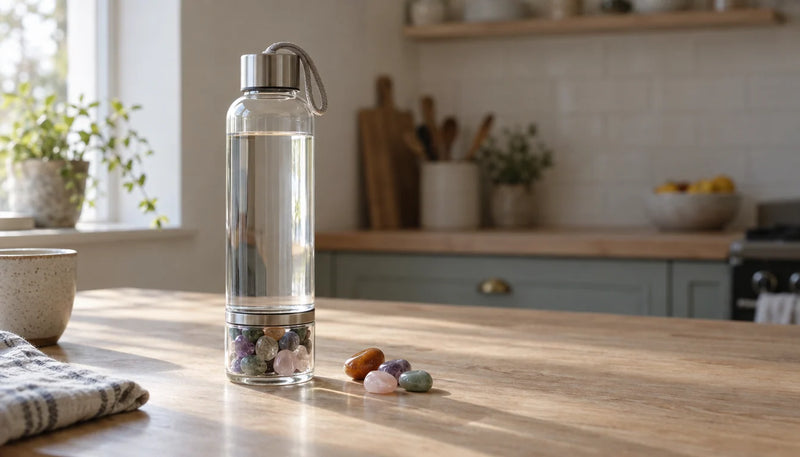
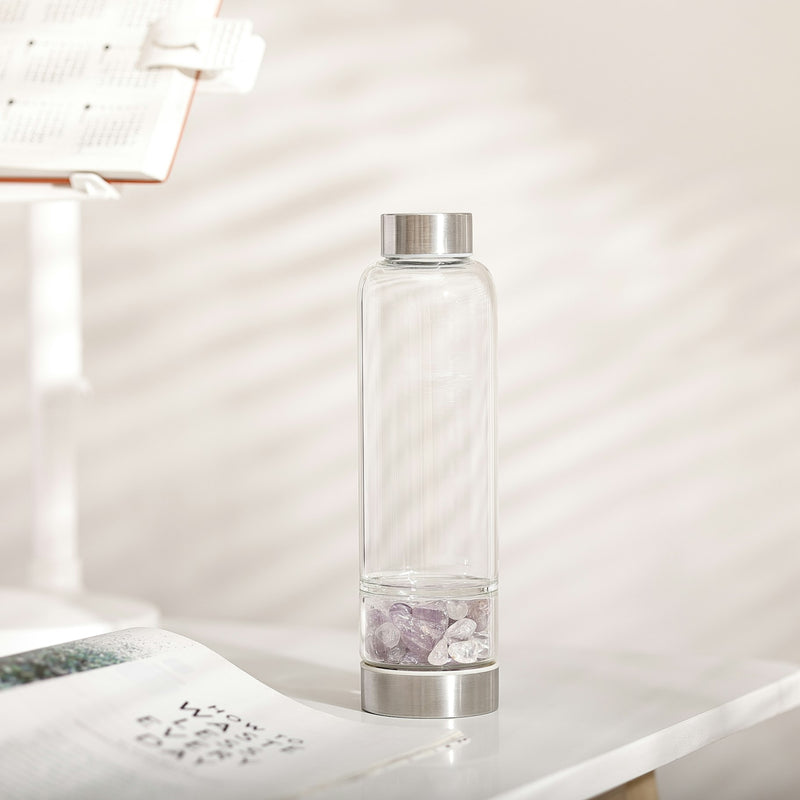
Bottles hold stones in a few ways. Some are fixed in place, some lift out, and some sit in a separate sealed chamber. Putting the stone right in the water is called direct infusion. Keeping it apart, so it never touches your drink, is called the indirect method.
Three stones should stay out of drinking water completely:
- Selenite is a form of gypsum, rated 2 on the Mohs scale, and it slowly dissolves in water.
- Malachite is a soft green stone made with copper, only 3.5 to 4 on the Mohs scale, per the Gemological Institute of America.
- Pyrite reacts with air and water and lets out iron and sulfate, the U.S. Geological Survey reports.
The Mohs scale is a 1 to 10 scale of how easily a mineral scratches, per Encyclopaedia Britannica. A low number means a soft stone. Pyrite's reaction can also make water acidic. Fluorite needs care too. It rates only 4 and splits easily along flat faces.
Hardness alone doesn't make a stone safe, though. Quartz rates 7, yet a stone that has been dyed or treated can still shed color or coating.
A sealed chamber solves most of this. But sealed only means safe if the seal holds, so check it before each use.
How do you choose a stone and match it to an intention?
Pick the stone you feel drawn to. Its meaning is a tradition, not a measured effect. Most beginners start with the quartz family. These stones are all forms of quartz, so they share its hardness of 7. Crystal traditions describe the common ones like this:
- Rose quartz is called the stone of love and self-kindness.
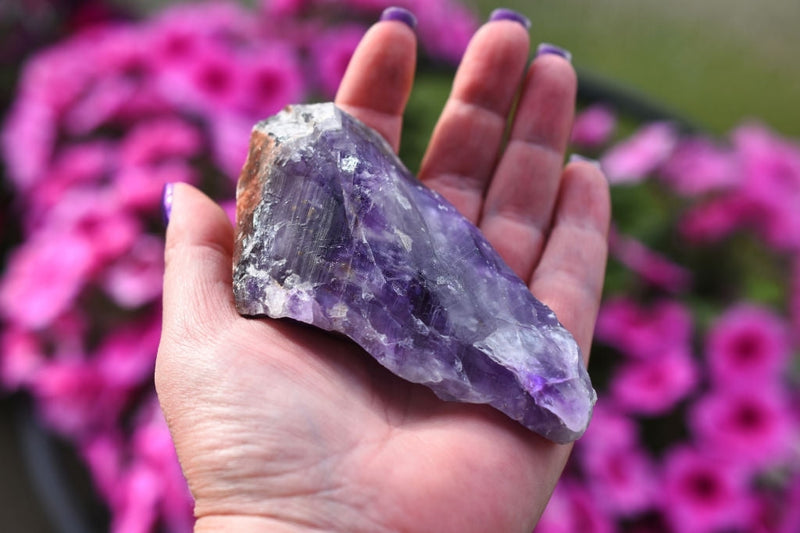
- Amethyst is linked with calm and rest.
- Clear quartz is seen as a stone of clarity and focus.
- Citrine is tied to optimism and fresh starts.
- Smoky quartz and obsidian are thought of as grounding stones.
Some people choose by intention, which just means a goal you want to keep in mind. Others choose by color. Either way works. Just make sure the stone is hard enough for daily use, since soft stones like selenite break down in water.
Sunlight fades amethyst. Keep it in a dry drawer or a soft pouch when it's out of your bottle.
Buy from sellers you trust, so your stones are real. Be wary of very cheap stones. Dyed ones often show color that looks too bright inside their cracks. The GIA's Gems & Gemology article on gem pigments shows how soft copper stones like malachite really are.
What should you check before buying a bottle?

People often ask for the best crystal bottle for beginners. There isn't one right brand. The best one is the bottle that passes these checks:
| What to check | Why it matters |
|---|---|
| Chamber design and seal | Keeps stones out of the water you drink |
| Glass thickness | Thicker glass handles bumps and daily use |
| Protective sleeve | Cushions drops and helps your grip |
| Leak-proof lid | Keeps bags and desks dry |
| Stone and intention | A stone you like keeps the ritual going |
| Ease of cleaning | Parts that come apart are easier to wash and dry |
Glass is the better pick for most people. California's Proposition 65 fact sheet on BPA lists BPA as a chemical of concern. BPA is found in some hard plastics, often marked with recycle code 3 or 7. The same state office suggests glass or stainless steel for drinks. The U.S. FDA notes that code 7 plastic may contain BPA, but it also says the approved uses in food containers are safe.
Look for thick walls too. Quartz is hard enough to scratch glass, and a stone that rattles around can wear down thin glass over time.
Test the lid at home. Fill the bottle, close it, and hold it upside down over a sink for a minute. Then give it a shake. A dry sink means a good seal. Even a few drops mean the lid isn't tight enough to protect the chamber or keep your bag dry.
What about a lifetime warranty? Don't take it on trust from an ad or a review. Look for the warranty on the seller's own product page, and read what it covers. Check if it covers the glass, the seal and the chamber, and how you would make a claim. If the product page says nothing, assume there is no warranty.
How do you clean a crystal water bottle by hand?

Washing by hand takes about five minutes. Follow these steps:
- Unscrew the base.
- Take out the stones and set them aside.
- Wash the bottle with mild soap and warm water.
- Rinse well.
- Let every part air dry fully before you put it back together.
Read the care label and skip the dishwasher. The Virginia Department of Health's BPA guidance warns against running hard plastic through the dishwasher with harsh soap. It also suggests glass, porcelain or stainless steel for hot drinks.
Dry the chamber, the lid and the gasket. The gasket is the small rubber ring that seals the lid. Water trapped there can grow mold.
Don't soak the stones. Store them dry, and keep amethyst out of strong sun. Soft stones like fluorite scratch easily, so wipe them with a dry cloth instead of scrubbing.
Where Gemstone Well fits
Gemstone Well makes Elixir2Go bottles. They keep the stones in a separate sealed chamber, so the stones never touch the water. The bottles are glass and come with a neoprene sleeve, a soft padded cover that helps with grip and bumps. That makes them a simple start for anyone who wants the indirect method.
Each bottle has a theme, such as Energy, Manifest, Love, Protection or Balance. You can browse the bottles by energy or see the rose quartz collection. Before you use a new stone, check which crystals can go in water.
The bottom line
A crystal water bottle gives you a ritual and a reminder. It doesn't change your water. Choose one with a sealed, separate chamber so the stones never touch your drink. Check the glass, the sleeve and the lid. Then wash it by hand and dry every part well.
Keep selenite, malachite and pyrite out of your water. They are soft, they dissolve, or they can leak copper or iron. Glass or stainless steel is a safer pick than hard plastic, which can contain BPA. After that, pick a stone you love and refill often. Let the bottle be a small daily nudge to drink more water.
See the crystal water bottles →
FAQ
Is it safe to put crystals straight into my drinking water?
Not as a habit. Some stones are soft, dyed or contain metals, so a sealed separate chamber is the safer choice.
Which stones should never go in drinking water?
Selenite, malachite and pyrite. Selenite is soft and dissolves, malachite contains copper, and pyrite lets out iron and sulfate in water.
Is a glass bottle better than a plastic one?
For most people, yes. California suggests glass or stainless steel because some hard plastics contain BPA, though the FDA says approved uses are safe.
How do I clean the stone chamber?
Unscrew the base, take out the stones, and wash by hand with mild soap and warm water. Dry the chamber, lid and gasket fully.
What should a beginner look for in a first crystal bottle?
Look for a sealed separate chamber, thick glass, a sleeve and a leak-proof lid. If a warranty matters to you, check that the seller's product page states it and what it covers.
Crystal meanings here are traditions, not medical advice. This article links to Gemstone Well products.
Related guide: VitaJuwel vs Glacce vs Gemstone Well
Related guide: Can Amethyst Go in Water? A Safety Guide

The Gemstone Well team writes about crystal water bottles, gemstone meanings and simple daily rituals. About us