GEMSTONEWELL
Black Tourmaline: Meaning, Protection and How to Use It
Black tourmaline is usually schorl, a stone crystal traditions trust for protection and grounding. Learn how to use it, care for it and spot a fake.
 By Gemstone Well
Published
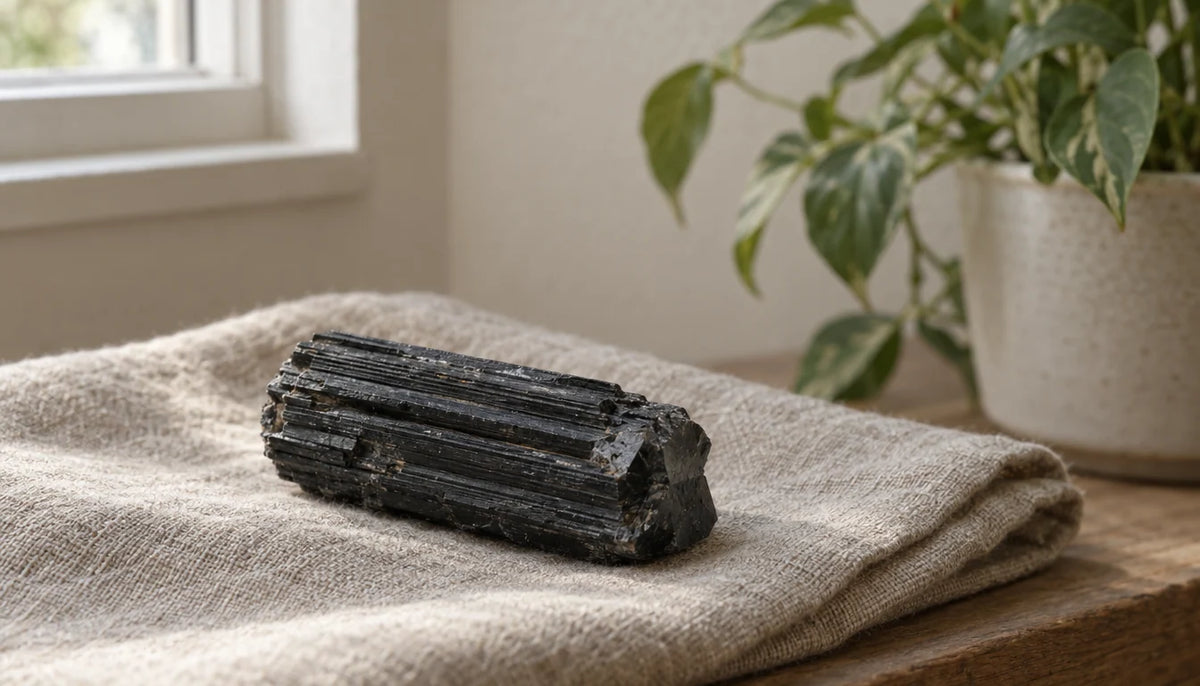
You've just picked up your first black tourmaline and want to know what you're holding. It's almost certainly schorl, the most common stone in the tourmaline family. In crystal traditions, black tourmaline is one of the most trusted crystals for protection and grounding.
People keep it by the front door or on a desk, hold it during a quiet grounding practice or keep it close in a crystal water bottle. Those meanings are beliefs handed down over time, not proven effects. What's real is a heavy, glossy black mineral with an interesting story of its own.
What is black tourmaline?
The black stone in your hand is most likely schorl (say "shorl"), according to Mindat's schorl mineral entry. It's the most common member of the tourmaline group, a family of minerals that share a similar crystal structure. When crystal shops sell "black tourmaline," schorl is what they mean.
Chemically, it's a mix of boron, silicon and metals like sodium, iron and aluminum. That sets it apart from look-alikes such as hematite, which is iron oxide, or quartz, which is silicon and oxygen.
Schorl is bluish-black to black, sometimes brownish-black, with a glassy to slightly waxy shine. It usually forms in granite and pegmatite, coarse rocks that cool slowly deep underground. Look closely at a raw piece and you'll see long grooves running down its length.
On the Mohs scale, which rates scratch resistance from 1 for talc to 10 for diamond, schorl sits at about 7. GIA's tourmaline care and cleaning guide puts tourmaline at 7 to 7.5 but rates its toughness as only fair. So it resists scratches well and can still chip if you drop it.

The name comes from a village near an old tin mine where the black stone turned up in large amounts. In the 1800s, people also called it iron tourmaline.
Why do crystal traditions call it a protection stone?
Traditions point to the stone's deep black color and solid weight. For many people, a dark, heavy stone feels like an anchor, something that helps them feel steady and safe. Black tourmaline is also linked to the root chakra. In some Eastern-rooted belief systems, a chakra is an energy point, and the root chakra sits at the base of the spine and is tied to feeling secure.
People who keep the stone say it brings a sense of safety or a calmer home. Those are personal experiences, and that's how they're best shared. Research hasn't backed up health effects from crystals: in a 2025 randomized trial of healing crystals and anxiety, a crystal did no better than a look-alike fake stone.
None of that takes away the ritual. Plenty of people simply enjoy a stone as a cue to slow down.
How do people use black tourmaline day to day?

Most people use it as something to see or hold for a minute or two, a small pause in the day. Where you put it is personal, but a few habits come up again and again.
By the front door, a stone on a shelf becomes a little "guarding the threshold" ritual as you come and go. On a desk, a small piece is a reminder to breathe between tasks. In a grounding practice, you hold the stone for three to five minutes, feel its weight and slow your breathing. Think of it as a mindfulness habit with something to hold onto.
Some people keep it with their drinking water, in a bottle that uses the indirect method. The stone sits in its own chamber and never touches the water.
- Entryway: a palm-sized piece near the door
- Desk: a small tumbled stone beside your keyboard
- Bedroom: a piece on the nightstand for winding down
- Pocket: a smooth, polished stone to hold on the go
A small ritual you enjoy every day beats an elaborate one you skip.
How does black tourmaline compare with other protection and grounding stones?
Black tourmaline, obsidian, hematite and smoky quartz are the four stones most often named as crystals for protection and grounding. They look and feel different, and they're not equally safe near water.
| Stone | Traditional meaning | How people use it | Water-safe or not |
|---|---|---|---|
| Black tourmaline | Protection, grounding | Doorway, desk, grounding practice | Use the indirect method; brittle, with grooves that trap dirt |
| Obsidian | Protection, reflection | Palm stones, meditation | Use the indirect method; volcanic glass with sharp edges |
| Hematite | Grounding, focus | Pocket stones, jewelry | Never in drinking water; this iron oxide can rust |
| Smoky quartz | Grounding, calm | Grids, desk stones | Indirect method advised; check it isn't treated |
Picking one is really about you. Some people choose by look, rough, glassy or metallic. Others go by feel: hematite is surprisingly heavy, and obsidian feels cool in the hand. Polished stones suit pockets, and raw ones suit shelves. If you want a stone near your water, keep it in a separate chamber whichever you choose.
How do you clean and care for black tourmaline?
Handle it gently. With toughness rated only fair, tourmaline can crack or chip if it's dropped.
Heat is the other risk. High heat can change tourmaline's color, and a sudden jump in temperature can crack it. Skip hot water, and don't leave it somewhere like a car dashboard in July.
To clean it, use warm, soapy water and a soft brush, then dry it well. GIA advises against ultrasonic and steam cleaners. Light, on the other hand, isn't a problem: tourmaline is generally stable in light and unaffected by everyday chemicals.
"Cleansing" in crystal traditions is a different thing, a personal ritual rather than a cleaning step. People ring a bell, breathe slowly over the stone or leave it on a windowsill overnight.
There's no rule about who shouldn't use it, but common sense helps. Raw pieces can have sharp edges, so keep them away from small children and choose polished stones for pockets. For any health question, ask a doctor.
How can you tell real black tourmaline from fake?
Real schorl is black, brittle and breaks unevenly. Fakes are usually black glass, obsidian or dyed stone. A few home checks help:
- Streak test. Rub the stone on the back of an unglazed white tile. According to a mineral data sheet from Brazil's Federal University of Rio Grande do Sul, schorl leaves a grayish-white to bluish streak.
- Weight. Schorl is dense, so it should feel heavy for its size.
- Grooves. Raw pieces show striations, fine lengthwise grooves along the crystal.
- Price and perfection. Flawless, very light or very cheap pieces deserve a second look.
Shine alone proves nothing, since tourmaline takes a polish easily. Buy from sellers who name the stone and where it came from, and treat any home test as a clue rather than proof.
Where Gemstone Well fits
Gemstone Well option: the Protection bottle, the Black Tourmaline & Clear Quartz Elixir Set, for someone who wants a daily protection-themed ritual with a dark stone in sight.
The bottle has a two-chamber design. The stones sit in their own chamber and never touch the water, and you swap them by unscrewing the base. The stone stays dry. You just drink.
The Bottom Line
In crystal traditions, black tourmaline means protection and grounding, a meaning that comes from belief rather than proof. As a mineral, it's schorl: black, about 7 on the Mohs scale and a little brittle. Keep it by the door, on your desk or in your hand for a few slow breaths. Clean it gently and keep it away from heat.
FAQ
Is black tourmaline really a protection stone? In crystal traditions, yes. That's a belief rather than a proven effect, and many people enjoy it as a grounding reminder.
Can you put black tourmaline in a water bottle? Use the indirect method, with the stone in its own chamber. Schorl is brittle, and its grooves can trap dirt.
How often should you cleanse it? There's no fixed rule. Some people do it weekly, others at each full moon.
Can it go in the sun or in water? Tourmaline is generally stable in light. A quick wash in warm, soapy water is fine, but keep it away from heat.
Where is the best place to keep it at home? The front door, a desk or a nightstand are the most popular spots. Pick somewhere you'll see it every day.
What's the difference between tourmaline and obsidian? Tourmaline is a crystal with lengthwise grooves and an uneven break. Obsidian is volcanic glass: smooth, with sharp curved edges.
See the crystal water bottles →
This guide is educational; crystal meanings are traditions, not medical advice. It includes links to Gemstone Well products.

The Gemstone Well team writes about crystal water bottles, gemstone meanings and simple daily rituals. About us